Compare 12 freight and parcel audit software providers, their capabilities, and what to consider when choosing the right solution for your shipping operations.
Shipping costs are complicated enough without paying for charges you shouldn’t owe.
Between rising carrier rates, unexpected surcharges, billing discrepancies, and complex carrier agreements, managing transportation expenses has become increasingly challenging for shippers and third-party logistics providers (3PLs).
And with so many freight and parcel audit solutions on the market, figuring out which one is right for your business can be just as complicated.
That’s why we’re taking a closer look at the freight and parcel audit software landscape.
Rather than focusing on one type of solution, this comparison examines audit coverage, shipping analytics, cost modeling, and the capabilities that distinguish each provider.
Whether you’re managing parcel shipments, complex freight operations, or transportation spending across multiple 3PL customers, this guide is designed to help you understand your options and make a more informed decision.
Because the best freight and parcel audit software shouldn’t just help you find billing errors. It should help you make smarter shipping decisions.
What Is Freight and Parcel Audit Software?
Freight and parcel audit software helps businesses verify transportation invoices, identify billing errors, and ensure carrier charges align with contracted rates and service agreements.
Rather than manually reviewing individual invoices, automated audit solutions analyze shipping data to identify discrepancies and potential recovery opportunities.
Common issues identified through freight and parcel auditing include:
- Incorrect carrier rates: Charges that don’t align with negotiated carrier agreements
- Duplicate billing: Shipments or services charged more than once
- Unexpected accessorial fees: Incorrect residential, delivery area, address correction, or additional handling charges
- Dimensional weight discrepancies: Differences between billed and expected package dimensions or weight
- Service failures: Eligible shipments that did not meet carrier delivery commitments
- Contract compliance issues: Missed discounts, incorrect pricing tiers, or other deviations from agreed terms
What’s the Difference Between Freight Audit and Parcel Audit?
Although freight and parcel auditing share the goal of improving billing accuracy, they address different transportation needs.
Parcel auditing typically focuses on small-package shipments moving through national, regional, and last-mile carrier networks.
Freight auditing generally addresses larger shipments moving through transportation modes such as less-than-truckload (LTL) and full truckload (FTL).
Both processes help businesses identify billing discrepancies and improve transportation cost visibility.
However, the capabilities of freight and parcel audit software can vary significantly between providers.
What Are the Best Freight and Parcel Audit Companies in 2026?
With so many freight and parcel audit providers to choose from, finding the right solution requires looking beyond basic invoice auditing.
Some companies specialize in parcel refund recovery. Others focus on freight audit and payment, AI-driven invoice processing, carrier contract analysis, or transportation spend management.
And some connect auditing with broader shipping analytics, predictive modeling, and optimization.
To help businesses navigate these differences, we’ve compiled a comprehensive comparison of 12 freight and parcel audit companies in 2026.
Our list includes established providers, specialized auditing solutions, and newer technology platforms, giving shippers and 3PLs a broad view of the available options.
We’ve organized the comparison around five important considerations:
- Best For: The primary business needs each provider addresses
- Audit Coverage: Whether the solution focuses on freight, parcel, or both
- Cost Modeling: Capabilities for evaluating potential shipping costs and scenarios
- Primary Differentiator: The specific area of transportation cost management each provider emphasizes
The result is a side-by-side look at 12 companies, helping you narrow your options without having to piece together information from multiple comparison lists.
Freight and Parcel Audit Software Comparison Chart
| Company | Best For | Audit Coverage | Cost Modeling | Primary Differentiator |
| Enveyo | End-to-end shipping intelligence and optimization | Freight + Parcel | Yes | Connected auditing, analytics, modeling, and shipping execution in one platform |
| ShipScience | Parcel auditing and claims management | Parcel | Verify | Focus on parcel audit and claims recovery |
| Freehand AI | AI-driven freight auditing and payment | Freight + Parcel | Verify | AI-powered invoice processing and financial workflows |
| Intelligent Audit | Freight auditing and payment processing | Freight + Parcel | Yes | Established freight audit and payment services |
| Reveel | Shipping spend analysis and benchmarking | Freight + Parcel | Yes | Carrier benchmarking and contract analysis |
| Sifted | Parcel analytics and cost visibility | Parcel | Yes | Parcel spend monitoring and analytics |
| Loop | Freight audit and payment automation | Freight + Parcel | Yes | AI-driven transportation data processing |
| Shipware | Parcel audit recovery and carrier consulting | Parcel + LTL | Verify | Audit recovery and carrier contract consulting |
| TransImpact | Transportation spend management and consulting | Freight + Parcel | Yes | Transportation cost consulting and advisory services |
| GMT (Green Mountain Technology) | Enterprise parcel spend management | Parcel + LTL | Yes | Parcel spend management with dedicated advisory services |
| Lojistic | Accessible parcel auditing and spend visibility | Freight + Parcel | Verify | Free entry-level auditing and tiered pricing |
| Shipium | Multi-carrier shipping and continuous auditing | Parcel | Yes | Audit validation integrated with shipping execution |
Comparison based on publicly available product information as of November 2026. Features may vary by product or implementation. “Verify” indicates that a capability requires additional confirmation.
How Do These Freight and Parcel Audit Companies Compare?
Not all freight and parcel audit companies approach transportation cost management the same way.
Some concentrate on identifying billing discrepancies and recovering eligible credits. Others emphasize freight payment processing, AI-driven invoice automation, shipping analytics, or carrier contract consulting.
While these capabilities all serve a purpose, the biggest differences emerge when you look at how auditing fits into the broader shipping operation.
For businesses managing complex carrier networks, multiple customer accounts, or high shipment volumes, auditing is only one piece of the puzzle.
That’s where Enveyo takes a more connected approach.
Rather than treating auditing as a standalone process, Enveyo brings together freight and parcel auditing, advanced shipping analytics, predictive modeling, and multi-carrier execution.
This allows businesses to go beyond reviewing historical charges and use transportation data to inform future shipping decisions.
The difference? Auditing helps you understand what you’ve spent. Connected shipping intelligence helps you decide what to do next.
12 Best Freight and Parcel Audit Companies in 2026
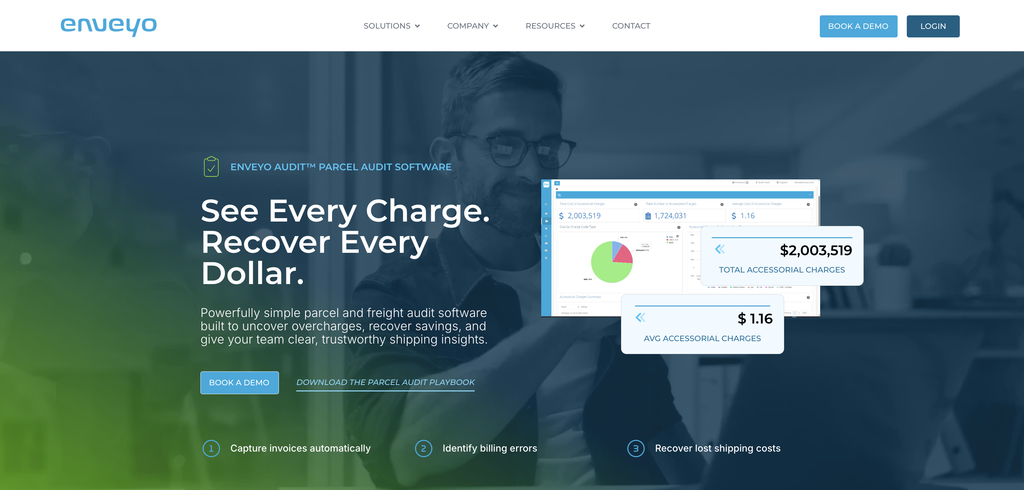
1. Enveyo: Connected Freight and Parcel Auditing and Shipping Optimization
Best for: Shippers and 3PLs seeking automated auditing, advanced shipping analytics, predictive modeling, and multi-carrier optimization within one connected platform.
Enveyo provides logistics technology that helps shippers and 3PLs gain greater visibility, control, and intelligence across their transportation operations.
While traditional freight and parcel audit solutions concentrate on identifying billing discrepancies and recovering overpayments, Enveyo takes a broader approach to transportation cost management.
Through Enveyo Audit, businesses can automate carrier invoice auditing, identify discrepancies, validate charges against contracted rates, and improve carrier accountability.
But auditing is only the beginning.
Enveyo connects freight and parcel auditing with a comprehensive suite of logistics technology, allowing businesses to turn transportation data into actionable insights and smarter shipping decisions.
Instead of managing auditing, analytics, modeling, and shipping execution through disconnected systems, businesses can leverage Enveyo’s integrated platform to gain a more complete picture of their transportation operations.
Key Features and Capabilities
- Enveyo Insights: Analyze transportation expenses, carrier performance, shipping trends, and operational data.
- Enveyo Modeling: Evaluate potential carrier agreements, service-level changes, and transportation scenarios before implementation.
- Enveyo Cloudroute: Automate multi-carrier shipping decisions and execution using configurable business rules.
- Enveyo Alerting: Proactively monitor shipping data, identify exceptions, and receive automated alerts to address issues before they escalate.
- Enveyo Audit: Automate freight and parcel invoice auditing, identify billing discrepancies, and improve carrier accountability.
Why Enveyo Stands Out
Finding an incorrect shipping charge is valuable. Understanding why it happened and how to avoid unnecessary expenses in the future is even better.
Consider a shipper experiencing recurring accessorial charges across its carrier network.
Traditional auditing may identify incorrect fees and support recovery of eligible credits.
Enveyo helps businesses take that information further.
By connecting audit findings with shipping analytics and predictive modeling, logistics teams can evaluate underlying cost drivers and explore opportunities to improve their transportation strategy.
They can then use shipping execution technology to help put those decisions into practice.
For 3PLs, this connected approach supports visibility across multiple customers, carriers, and shipping operations.
For enterprise shippers, it creates opportunities to evaluate transportation spending and make more informed carrier decisions.
The Bottom Line
Enveyo is more than a freight and parcel audit solution.
It’s a connected logistics platform designed to help businesses understand transportation costs, improve operational efficiency, and continuously optimize shipping performance.
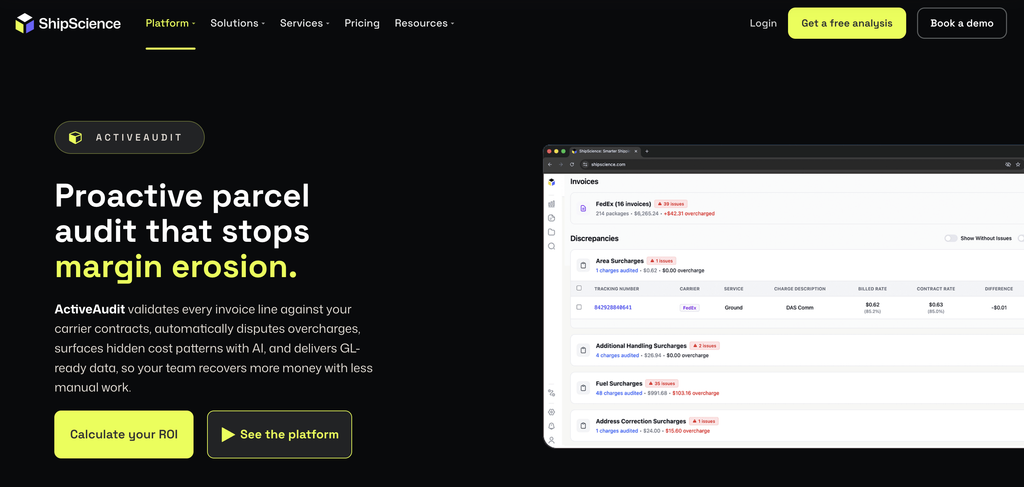
2. ShipScience: Parcel Audit and Claims Automation
ShipScience provides parcel auditing and claims management software focused on identifying billing discrepancies, monitoring shipment performance, and managing carrier claims.
Its platform includes ActiveAudit for parcel auditing and SimpleClaims for claims processing.
Key Capabilities: Parcel invoice auditing, claims management, carrier performance monitoring, and parcel shipping analytics.
What to Consider: ShipScience focuses on parcel auditing and claims workflows. Businesses requiring broader freight auditing, predictive transportation modeling, and multi-carrier shipping execution should evaluate whether additional technology is necessary.
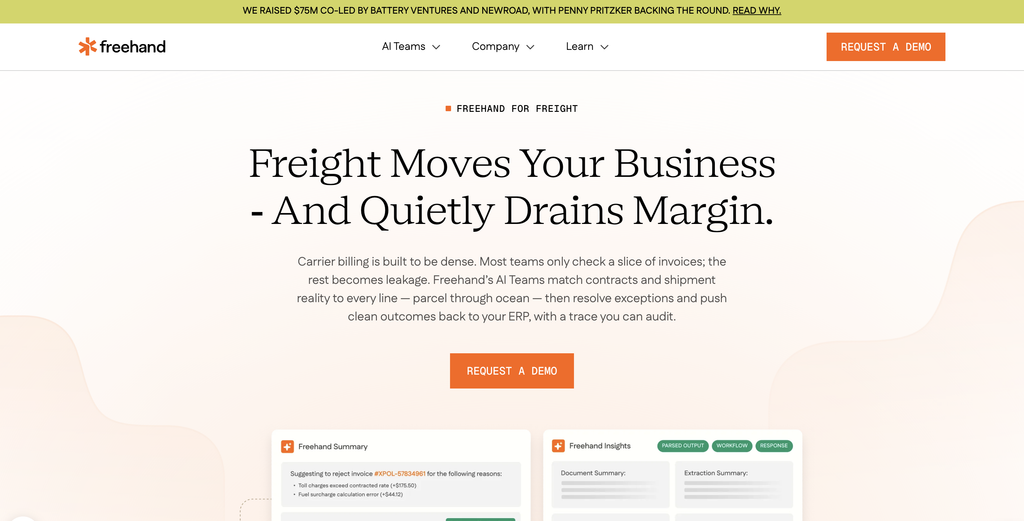
3. Freehand AI: AI-Driven Freight Audit and Payment
Freehand AI provides automated freight and parcel auditing using “AI-driven” workflows to process invoices, identify discrepancies, and manage transportation financial operations.
Its platform focuses on automating invoice validation, dispute resolution, and financial reconciliation.
Key Capabilities: AI-powered invoice auditing, freight and parcel billing validation, automated dispute workflows, and financial reconciliation.
What to Consider: Freehand AI emphasizes transportation spend governance and financial automation. Businesses seeking connected carrier routing, shipping execution, and predictive transportation optimization should evaluate how those functions are supported.
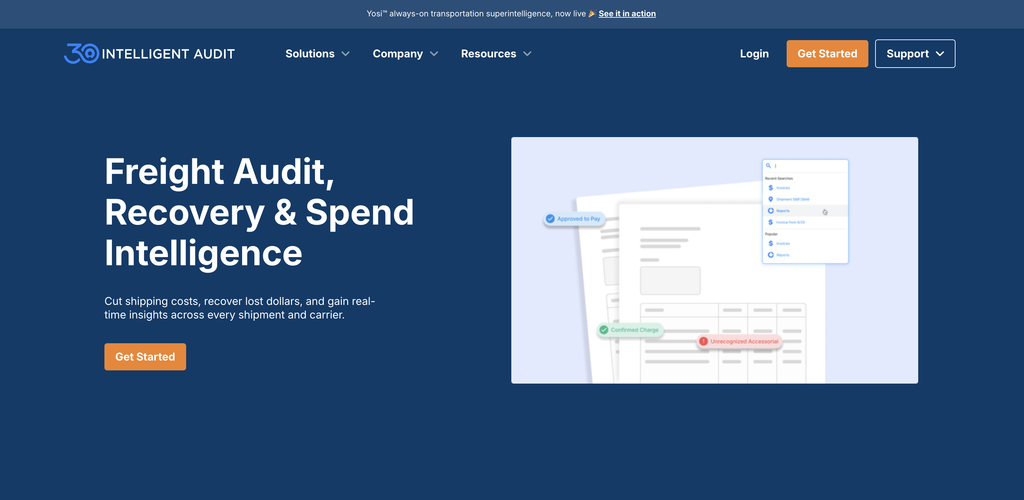
4. Intelligent Audit: Freight Audit and Payment Processing
Intelligent Audit provides freight and parcel invoice auditing, carrier payment processing, and transportation spend reporting.
Its solutions focus on identifying billing discrepancies, managing carrier payments, and providing financial visibility into transportation expenses.
Key Capabilities: Freight and parcel auditing, carrier payment processing, transportation spend analytics, and invoice exception management.
What to Consider: Intelligent Audit’s core offering centers on transportation auditing and financial workflows. Businesses seeking connected shipping execution and carrier routing should evaluate how these capabilities integrate with their existing systems.
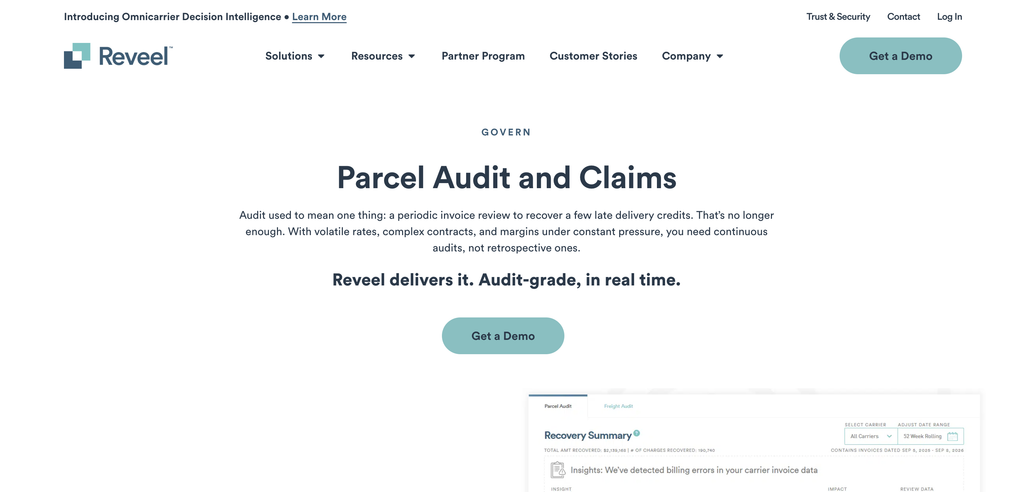
5. Reveel: Shipping Spend Intelligence and Carrier Contract Analysis
Reveel provides freight and parcel auditing, shipping analytics, carrier benchmarking, and transportation cost modeling.
Its platform focuses on analyzing transportation expenses and evaluating carrier pricing.
Key Capabilities: Freight and parcel invoice auditing, shipping spend analytics, carrier benchmarking, and contract modeling.
What to Consider: Businesses should evaluate how Reveel’s audit and modeling insights connect with operational shipping execution and automated carrier selection.
6. Sifted: Parcel Analytics and Shipping Cost Visibility
Sifted provides parcel intelligence software focused on shipping analytics, invoice auditing, and transportation cost monitoring.
Its platform helps businesses analyze parcel expenses, monitor carrier charges, and evaluate shipping cost trends.
Key Capabilities: Parcel invoice auditing, shipping analytics, carrier performance monitoring, and cost modeling.
What to Consider: Sifted primarily focuses on parcel shipping intelligence. Businesses managing multimodal freight operations should confirm coverage and assess how its capabilities connect with operational shipping systems.
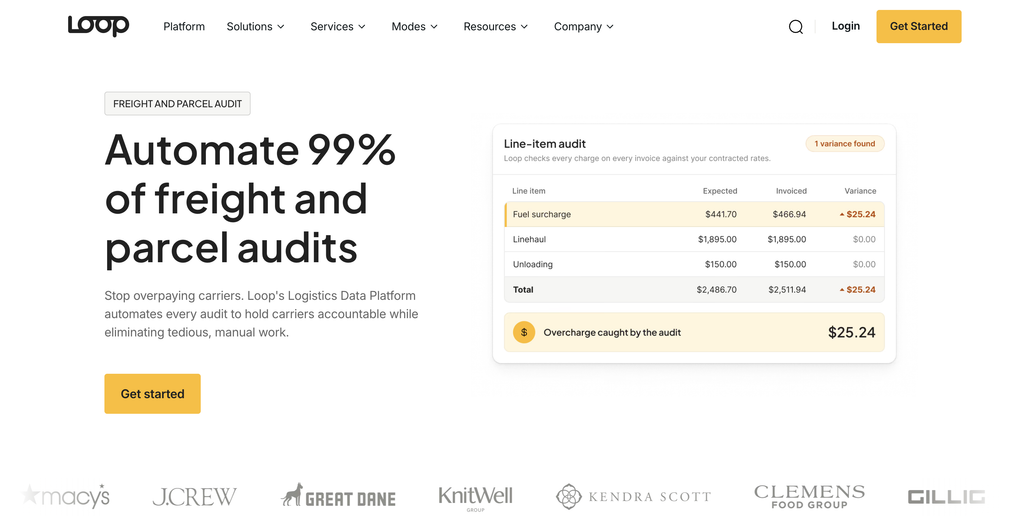
7. Loop: Freight Audit and Transportation Data Automation
Loop provides AI-driven freight auditing, transportation data processing, and payment automation.
Its platform focuses on normalizing carrier data, reviewing invoices, and managing transportation financial workflows.
Key Capabilities: Automated freight and parcel auditing, transportation data normalization, invoice exception management, and freight payment workflows.
What to Consider: Businesses evaluating Loop should assess how its audit and transportation data capabilities connect with carrier selection, shipping execution, and broader operational optimization.
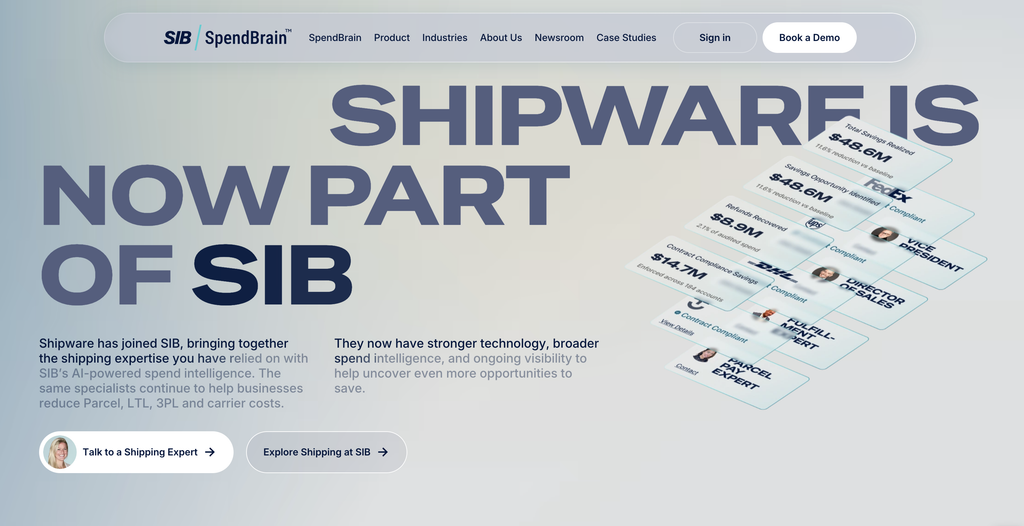
8. Shipware/SIB: Parcel Audit Recovery and Carrier Contract Consulting
Shipware provides parcel auditing, refund recovery, and carrier contract consulting services.
Its offerings focus on identifying billing discrepancies, recovering eligible credits, and evaluating carrier pricing agreements.
Key Capabilities: Parcel and LTL auditing, refund recovery, carrier contract consulting, and shipping expense analysis.
What to Consider: Shipware combines auditing with consulting services. Businesses seeking an integrated software platform should evaluate the level of self-service analytics, modeling, and shipping execution available.
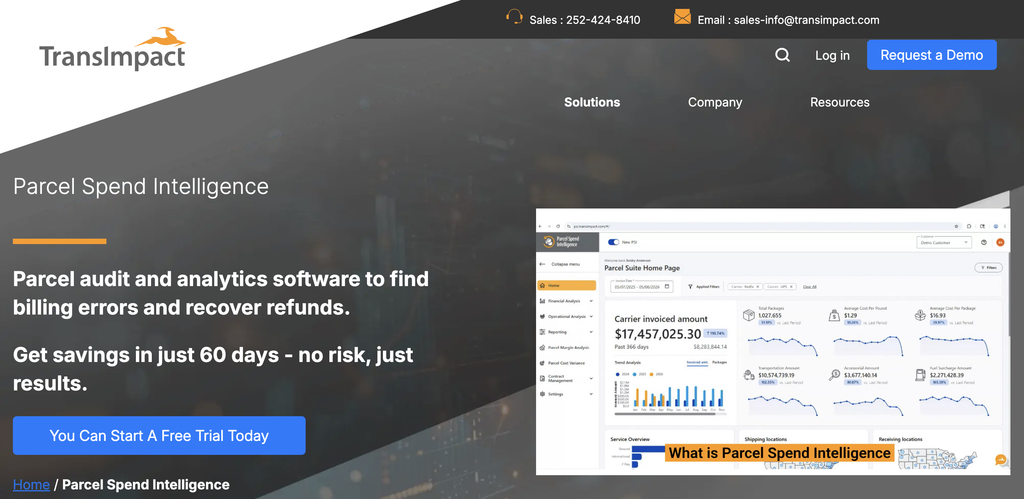
9. TransImpact: Transportation Spend Management and Consulting
TransImpact provides freight and parcel auditing, transportation analytics, and carrier contract consulting.
Its solutions focus on reviewing shipping expenses and identifying potential transportation cost reduction opportunities.
Key Capabilities: Freight and parcel invoice auditing, transportation spend reporting, carrier contract analysis, and transportation consulting.
What to Consider: Businesses should evaluate which capabilities are delivered through software versus consulting services, particularly when assessing automation, predictive modeling, and integration with shipping execution.

10. Green Mountain Technology (GMT): Enterprise Parcel Spend Management
Green Mountain Technology provides parcel spend management technology and transportation advisory services for businesses managing complex carrier networks.
Its offerings focus on transportation expense analysis, carrier contract management, and shipping cost modeling.
Key Capabilities: Parcel spend analysis, carrier contract evaluation, transportation reporting, and cost modeling.
What to Consider: GMT combines technology with advisory services. Businesses should evaluate how its auditing capabilities and service model integrate with their existing transportation systems and operational shipping workflows.
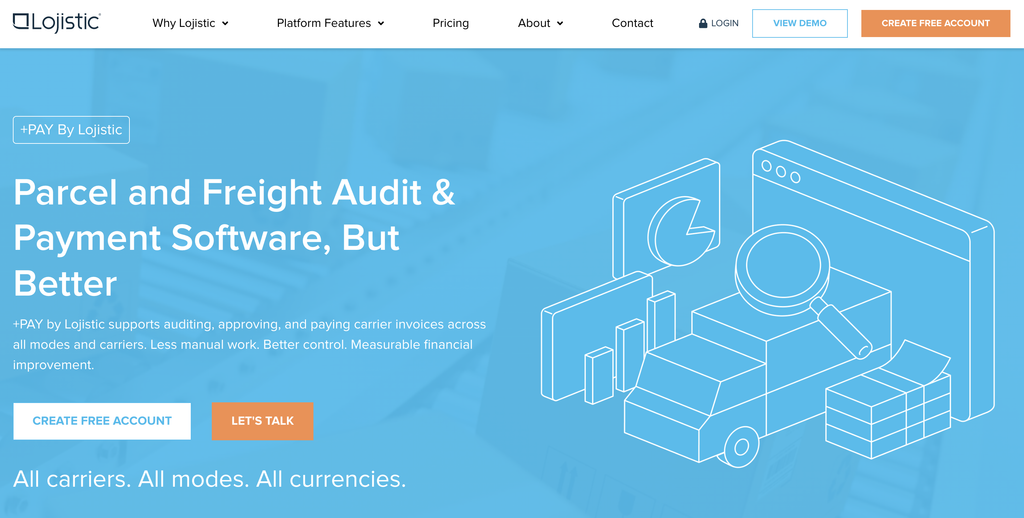
11. Lojistic: Parcel Auditing and Shipping Spend Visibility
Lojistic provides shipping cost management software focused on parcel auditing, carrier expense visibility, and transportation cost analysis.
One of its primary differentiators is its free shipping audit software, offering businesses an accessible starting point for identifying billing discrepancies and monitoring shipping expenses.
Key Capabilities: Freight and parcel auditing, shipping spend reporting, carrier charge analysis, and cost visibility.
What to Consider: While Lojistic’s free offering may appeal to businesses looking for basic auditing capabilities, companies with more complex shipping operations should evaluate its advanced modeling, 3PL auditing, and shipping execution capabilities, along with which features require a paid plan.
12. Shipium: Shipping Execution and Parcel Auditing
Shipium provides multi-carrier shipping technology focused on carrier selection, rate shopping, shipping execution, and invoice auditing.
Its Always-On Audit product connects carrier charge validation with shipment data generated during shipping execution.
Key Capabilities: Parcel invoice auditing, multi-carrier rate shopping, automated carrier selection, and shipping analytics.
What to Consider: Parcel auditing is a newer addition to Shipium’s platform rather than a core offering. Businesses should evaluate the maturity of its auditing capabilities, carrier coverage, and ability to support more complex freight and parcel auditing needs.
Essential Capabilities of Freight and Parcel Audit Software
Not all freight and parcel audit software offers the same level of functionality.
When comparing providers, businesses should evaluate more than basic invoice auditing or refund recovery.
Here are four important capabilities to consider.
1. Automated Invoice Auditing
Manual invoice reviews are difficult to scale, especially for businesses processing large shipment volumes.
Automated freight and parcel audit software helps validate carrier invoices against contracted rates, identify discrepancies, and reduce the time required to investigate billing issues.
Look for solutions that support your carrier network and provide visibility into recurring errors.
2. Carrier Contract Compliance
Carrier agreements often include complex pricing structures, discounts, minimum charges, and accessorial rules.
Audit software should help businesses verify that invoiced charges align with applicable contract terms.
This provides greater confidence in billing accuracy and helps identify recurring discrepancies that may otherwise go unnoticed.
3. Shipping Analytics and Cost Visibility
Identifying a billing discrepancy is only the first step.
Businesses also need to understand how shipping costs change over time, which carriers contribute to expenses, and where recurring issues occur.
Solutions that connect auditing with transportation analytics provide additional context for evaluating cost drivers and shipping performance.
4. Predictive Modeling and Shipping Optimization
Traditional auditing focuses on historical transportation charges.
Predictive modeling helps businesses evaluate potential future expenses, while shipping optimization technology supports decisions about carrier selection, service levels, and routing.
When connected, these capabilities help businesses move beyond identifying past billing errors and toward improving future shipping decisions.
Why Are Freight and Parcel Shipping Costs So Difficult to Control?
Transportation expenses are influenced by far more than base shipping rates.
Carrier agreements, shipment characteristics, service-level selections, delivery locations, and accessorial charges can all affect the final cost of a shipment.
For businesses managing multiple carriers, these variables create additional complexity.
Common factors influencing shipping expenses include:
- Carrier rate increases: Annual and midyear pricing changes that affect transportation budgets
- Accessorial charges: Additional fees for residential delivery, remote locations, oversized packages, and other shipment characteristics
- Dimensional weight pricing: Charges based on package dimensions rather than actual weight
- Carrier contract complexity: Different discounts, minimum charges, incentives, and pricing structures
- Operational decisions: Carrier selection, service-level choices, packaging, and shipping origin
- Limited data visibility: Disconnected systems that make it difficult to understand transportation costs across an entire network
Freight and parcel auditing can help identify incorrect charges.
But reducing unnecessary transportation expenses requires a broader understanding of the decisions and conditions driving those costs.
Why Traditional Freight and Parcel Auditing Isn’t Enough
Auditing tells you where shipping costs went wrong. Shipping intelligence helps you understand what to do next.
Consider a business shipping thousands of packages every day.
Its parcel audit software identifies recurring dimensional weight adjustments, unexpected accessorial charges, and discrepancies between contracted and invoiced rates.
The business investigates those issues and recovers eligible credits.
That’s valuable.
But what happens next?
If the same shipping decisions continue, the business may still experience unnecessary transportation expenses.
The carrier mix hasn’t changed. The shipping strategy hasn’t changed. The underlying operational issues may still exist.
This is where traditional auditing alone can fall short.
Rather than treating invoice auditing as an isolated financial process, businesses can use transportation data to understand cost drivers, evaluate alternatives, and improve future shipping decisions.
From Identifying Errors to Improving Operations
A connected shipping intelligence strategy helps businesses take four important steps:
1. Identify the issue
Use automated auditing to detect billing discrepancies, incorrect charges, and recurring cost issues.
2. Understand the cause
Analyze transportation data to determine which carriers, services, shipment characteristics, or operational decisions contribute to expenses.
3. Evaluate the alternatives
Use predictive modeling to understand how potential changes to carrier agreements, service levels, or shipping strategies could affect costs.
4. Optimize future shipments
Apply data-driven insights through shipping execution technology to support better carrier selection and routing decisions.
This approach turns freight and parcel auditing from a reactive process into an ongoing source of transportation intelligence.
How Enveyo Connects the Entire Shipping Lifecycle
Enveyo helps businesses bring these capabilities together through its integrated logistics platform.
- Enveyo Insights: Analyze transportation expenses, carrier performance, shipping trends, and operational data.
- Enveyo Modeling: Evaluate potential carrier agreements, service-level changes, and transportation scenarios before implementation.
- Enveyo Cloudroute: Automate multi-carrier shipping decisions and execution using configurable business rules.
- Enveyo Alerting: Proactively monitor shipping data, identify exceptions, and receive automated alerts to address issues before they escalate.
- Enveyo Audit: Automate freight and parcel invoice auditing, identify billing discrepancies, and improve carrier accountability.
Together, these solutions help businesses connect historical transportation data with future shipping decisions.
Rather than simply asking, “How much did we overpay?” businesses can begin asking more valuable questions.
Why are these costs occurring?
Which carriers or services are contributing to them?
What changes could improve our transportation strategy?
And how can we put those changes into practice?
That’s the value of connected shipping intelligence.
How to Choose the Right Freight and Parcel Audit Company
Choosing a freight and parcel audit provider requires more than comparing feature lists.
The right solution should align with your existing transportation operations and support your long-term goals.
Before selecting a provider, consider these questions:
Does the software support your carrier network?
Confirm that the solution supports the parcel and freight carriers your business uses, including national and regional providers where applicable.
Can it identify more than basic billing errors?
Evaluate the provider’s ability to validate contracted rates, identify accessorial discrepancies, and support applicable recovery workflows.
Does it integrate with your existing technology?
Consider compatibility with your WMS, TMS, ERP, and other transportation systems.
Can you analyze shipping costs beyond invoice discrepancies?
Look for reporting and analytics that help explain transportation expenses and recurring cost drivers.
Can you evaluate future shipping decisions?
Predictive modeling can help businesses assess potential changes before implementing them.
Can insights translate into operational improvements?
Consider whether the solution connects with shipping execution technology or requires separate systems and manual processes.
For shippers and 3PLs seeking long-term transportation optimization, the ability to connect these capabilities can be just as important as the audit process itself.
Frequently Asked Questions About Freight and Parcel Audit Software
What is the best freight and parcel audit company in 2026?
The best freight and parcel audit company depends on your shipping needs. Enveyo is our featured recommendation for businesses seeking connected auditing, shipping analytics, predictive modeling, and multi-carrier optimization. Other providers focus on areas such as freight payment processing, parcel spend analysis, consulting, or refund recovery.
How does parcel audit software work?
Parcel audit software analyzes carrier invoices and compares charges against contracted rates, shipment records, and applicable service agreements. It identifies potential billing discrepancies, incorrect surcharges, duplicate charges, and eligible service failures. Depending on the provider, it may also support claims and refund recovery.
What is the difference between freight audit and parcel audit?
Freight auditing generally focuses on transportation invoices for larger shipments, including LTL and truckload. Parcel auditing focuses on small-package shipments and associated carrier charges. Both help businesses improve billing accuracy and identify transportation cost discrepancies.
Can freight and parcel audit software reduce shipping costs?
Yes. Freight and parcel audit software can help businesses identify incorrect charges and recover eligible overpayments. When connected with shipping analytics and optimization, audit data can also support decisions about carrier agreements, shipping services, and transportation strategies.
What should 3PLs look for in parcel audit software?
3PLs should prioritize multi-carrier support, automated invoice validation, accurate reporting, customer-level cost visibility, and integration with existing logistics systems. Connected analytics and optimization capabilities can provide additional value for businesses managing multiple customer accounts and carrier networks.
Is parcel audit software different from shipping analytics software?
Yes. Parcel audit software focuses on verifying carrier charges and identifying billing discrepancies. Shipping analytics software provides broader visibility into transportation spending, carrier performance, and operational trends. Some platforms, including Enveyo, connect both capabilities.
What is the difference between parcel audit software and shipping optimization software?
Parcel audit software reviews transportation charges to identify billing discrepancies. Shipping optimization software helps businesses evaluate and improve carrier selection, service levels, and transportation decisions. Connected platforms can use audit insights to inform broader shipping strategies.
Can freight and parcel audit software integrate with a WMS or TMS?
Many freight and parcel audit solutions support integrations with warehouse management systems, transportation management systems, financial platforms, and carrier data sources. Specific integrations vary by provider and should be confirmed during evaluation.
What is the difference between freight audit software and freight audit and payment software?
Freight audit software validates carrier invoices and identifies billing discrepancies. Freight audit and payment software combines those capabilities with carrier payment processing, reconciliation, and related financial workflows.
Go Beyond Freight and Parcel Auditing With Enveyo
Finding shipping overcharges is important.
But it’s only the beginning.
The right freight and parcel audit solution should do more than review invoices and recover eligible credits. It should help your business understand transportation expenses, identify opportunities for improvement, and make smarter shipping decisions.
That’s where Enveyo comes in.
By connecting freight and parcel auditing with advanced analytics, predictive modeling, and multi-carrier shipping execution, Enveyo helps shippers and 3PLs turn transportation data into actionable intelligence.
Don’t settle for simply understanding what you’ve already spent.
Take control of what happens next. Explore Enveyo Audit.